
FLORIDA CHILD SUPPORT & FAMILY LAW
Florida Divorce Attorney Serving Orlando Families
When your marriage is ending, the decisions you make today can affect your finances, your children, your home, and your future.
MGM Law Group provides strong advocacy and compassionate counsel to help you navigate Florida divorce and dissolution of marriage with clarity, confidence, and a strategy built around your circumstances.

- Strong Advocate
- Compassionate Counsel
- Florida Family Law
- Orlando, Florida
understanding your options starts with understanding the law
FLORIDA NO-FAULT DIVORCE
Florida generally does not require a spouse to prove that the other spouse caused the marriage to end.
SIX-MONTH RESIDENCY
Generally, at least one spouse must have resided in Florida for six months before filing for dissolution.
EQUITABLE DISTRIBUTION
Marital assets and liabilities are divided under Florida’s equitable-distribution framework.
CHILDREN & PARENTING
A divorce involving minor children may require a parenting plan, time-sharing schedule, and child support.
FLORIDA DIVORCE & FAMILY LAW
What Is a Divorce in Florida?

In Florida, divorce is legally referred to as dissolution of marriage.
Florida is generally a no-fault divorce state. A spouse does not ordinarily have to prove that the other spouse caused the marriage to end. Instead, Florida law provides for dissolution when a marriage is irretrievably broken.
Generally, at least one spouse must have resided in Florida for six months before filing for dissolution of marriage.
But obtaining a divorce is only one part of the process.
Depending on your circumstances, you may also need to resolve issues involving:
Marital property and debt
The marital home
Retirement accounts
Business interests
Alimony
Child support
Parenting plans
Time-sharing
Other financial and family-law matters


Ending the marriage may be straightforward. Resolving everything around it may not be.


START WHERE YOU ARE
What Are You Facing Right Now?
You may already know that you want a divorce. You may be unsure what happens next. Choose the situation that feels closest to yours.
I'M considering DIVORCE
I want to understand my options before taking the next step.
MY SPOUSE FILED FOR DIVORCE
I’ve been served or my spouse has started the process, and I need to understand what comes next.
WE AGREE ON MOST issues
We want to resolve our divorce without unnecessary conflict.
WE DISAGREE ABOUT PROPERTY OR support
We’re having difficulty reaching an agreement about assets, debt, the home, or support.
WE HAVE CHILDREN
I have questions about parenting, time-sharing, or child support.
I'M NOT SURE WHAT MY RIGHTS ARE
I have questions and need to understand my legal position.

DIVORCE IS A LEGAL PROCESS. YOUR LIFE IS PERSONAL.
A Clear Path Through a Difficult Transition
Divorce can bring uncertainty about nearly every part of your life.
What happens to your home?
How will your finances be divided?
Will you receive or pay alimony?
What happens with your children?
What does life look like after the divorce?
These aren’t simply legal questions.
They are decisions that can affect your next chapter.
At MGM Law Group, we help clients understand the legal process, identify the issues that matter to you, so you can make informed decisions about the future.
Whether your divorce is amicable or highly contested, our approach is centered on preparation, communication, strategic advocacy, and compassionate counsel.
UNDERSTANDING FLORIDA LAW
Florida Is a No-Fault Divorce State
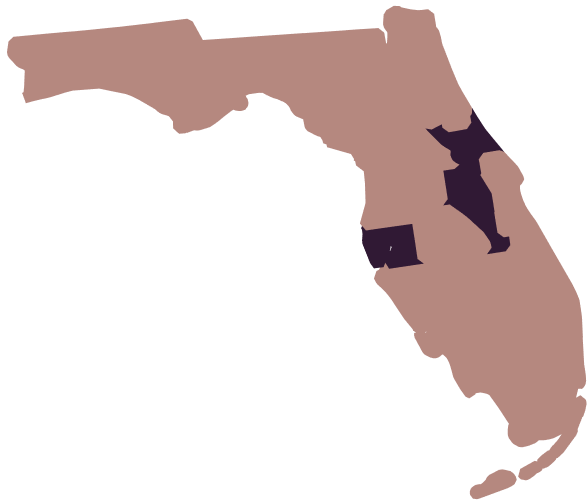
Florida generally does not require a spouse to prove that the other spouse cheated, abandoned the marriage, or otherwise caused the relationship to end in order to obtain a dissolution.
Instead, Florida law recognizes that a marriage may be irretrievably broken.
The focus is therefore generally not on proving who is responsible for the end of the marriage.
But no-fault divorce does not mean that every divorce is simple.
Even when both spouses agree that the marriage should end, they may still need to resolve significant issues involving property, finances, children, and support.
important issues may include
Property
Who receives the marital home and other assets?
Debt
How will marital liabilities be allocated?
Support
Will alimony or child support be part of the case?
Children
How will parenting responsibilities and time-sharing work?
Retirement & Investments
How will potentially marital portions of financial accounts be addressed?
Business Interests
What happens when a business or professional practice is involved?
No-Fault Doesn't Mean No Complications.
The reason your marriage ended may not determine whether you can obtain a divorce,but, the issues surrounding your divorce can still require careful legal attention.

BEFORE YOU FILE
Who Can File for Divorce in Florida?
Florida law generally requires at least one spouse to have resided in Florida for six months before filing a petition for dissolution of marriage.
Residency may be established through qualifying evidence, such as a Florida driver’s license, Florida identification card, voter registration, or other evidence accepted by the court.
If you recently moved to Florida, live in different states from your spouse, or are uncertain whether you meet Florida’s residency requirement, your circumstances should be reviewed carefully before filing.
WHICH PATH FITS YOUR SITUATION?
Contested vs. Uncontested Divorce in Florida
Florida divorces proceed along two distinct paths based on whether both spouses can mutually resolve all legal rights without judicial intervention.
MUTUAL ACCORD
Uncontested Divorce
When You Can Reach an Agreement
In an uncontested divorce, you and your spouse agree on every single legal matter prior to finalizing the dissolution:
- Full division of all marital assets and liabilities
- Complete waiver or terms of spousal support (alimony)
- Parenting plan detailing all time-sharing schedules
- Statutory Florida child support guidelines calculation
“An agreement is only as helpful as the terms it contains. Proper drafting prevents future costly litigation.”


COMPLEX LITIGATION
Contested Divorce
When Important Issues Remain Unresolved
When spouses cannot reach consensus on one or more core issues, the divorce is contested and enters formal procedural phases:
- Disputes over valuation of the marital home or businesses
- Contested entitlement, duration, or amount of alimony
- Disagreements over custody, timesharing, or relocation
- Formal financial discovery, depositions, and evidentiary hearings
“Contested matters require strategic courtroom advocacy to protect your assets and parental rights before a Florida judge.”
PROPERTY, ASSETS & DEBT
How Is Property Divided in a Florida Divorce?
Florida applies the legal doctrine of equitable distribution under Fla. Stat. § 61.075. The court divides marital property fairly—which starts with a presumption of equal division, but may be adjusted based on statutory factors.
IDENTIFY
Locate and compile a comprehensive inventory of all real property, liquid assets, investments, and debts.
CLASSIFY
Distinguish non-marital (separate) property from marital assets acquired during the union.
Value
Determine the fair market valuation of homes, businesses, retirement plans, and collectibles.
DISTRIBUTE
Formulate a balanced,
equitable allocation plan through negotiation or court decree.

Real Estate
The primary marital residence, vacation homes, and commercial rental parcels.

Bank & Investments
Checking, savings, brokerage portfolios, crypto-assets, and cash reserves.

Retirement Accounts
401(k) plans, traditional & Roth IRAs, pensions, and executive deferred package.

Business Interests
Privately held companies, professional practices, equity options, and brand goodwill.

Vehicles & Valuables
Automobiles, watercraft, jewelry, fine art collections, and household furnishings.

Debts & Liabilities
Mortgages, HELOCs, student loans, auto financing, and credit card balances.
Equitable Doesn't Always Mean Equal
In equitable distribution, the details of your financial situation matters.
SPOUSAL SUPPORT
Could Alimony Be Part of Your Florida Divorce?
Under Florida’s updated alimony statutes, spousal support is determined through a two-step inquiry: first, proving a party’s actual need for support, and second, determining the other party’s ability to pay.
Duration of the Marriage
Short-term (less than 10 years), moderate-term (10to 20 years), or long-term (20+ years).
Earning Capacity & Employability
Vocational skills, educational attainment, and reasonable time needed to acquire employment.
Standard of Living
The lifestyle and reasonable recurring expenses established jointly throughout the marital union.
ADVOCACY FOR RECIPIENTS
Seeking Support?
Understand what may be available under current Florida law and what financial factors will impact an alimony determination, including temporary, bridge-the-gap, rehabilitative, or durational support.
DEFENSE & PRESERVATION
Being Asked to Pay?
Understand your potential obligations and how support requests could affect your overall financial position, cash flow, tax implications, and post-judgment flexibility.
WHEN CHILDREN ARE INVOLVED
Protecting What Matters Most
When children are involved, divorce involves more than dividing property and finances. Parents will need to to establish a parenting plan addressing how important decisions will be made and when children will spend time with each parent. Child support and other parental responsibilities will also need to be addressed.
Time-Sharing Schedules
A schedule establishing when the children will spend time with each parent, including overnight stays.
DECISION-MAKING AUTHORITY
Shared legal decision-making regarding education, medical treatment, and religious upbringing.
School & Activities
Designation of school zoning boundaries, tutoring, and funding for extracurricular commitments.
Holidays & Vacations
Alternating annual holiday rotations, spring break schedules, and summer travel protocols.
Exchange & Transportation
Designated exchange locations, pick-up/drop-off punctuality rules, and travel logistics.
Healthcare & Insurance
Maintenance of health, dental, and vision insurance policies, and unreimbursed expense splits.
The Goal Isn't Simply to "Win"
When children are involved, divorce involves more than dividing property and finances. Parents will need to to establish a parenting plan addressing how important decisions will be made and when children will spend time with each parent. Child support and other parental responsibilities will also need to be addressed.

WHAT HAPPENS NEXT?
The Florida Divorce Process
A step-by-step roadmap showing how our firm guides your matter from inception to final judgment.
Initial Consultation
Locate and compile a comprehensive inventory of all real property, liquid assets, investments, and debts.
Filing for Dissolution
Drafting and formal filing of the Petition for Dissolution of Marriage and formal service of process.
Financial Disclosure
Mandatory exchange of Florida Family Law Financial Affidavits, tax filings, and account statements.
Negotiation & Mediation
Florida courts require mediation for contested matters; we vigorously pursue favorable settlement terms without courtroom friction.
Litigation (If Needed)
When negotiations fail, we represent you at temporary relief hearings, evidentiary trials, and final judgment.
Final Judgment
The court signs the Final Judgment of Dissolution, legally ending the marriage and establishing binding orders.
WHY MGM LAW GROUP
Strong Advocacy. Compassionate Counsel.
We bring uncompromising integrity and personalized attention to Central Florida families navigating life-defining marital transitions.
Strong Advocate
Unwavering representation inside and outside of the courtroom. We fight fiercely to protect your parental rights and safeguard the assets you worked hard to build.
Clear Counsel
Straightforward legal analysis with zero ambiguity. We provide realistic expectations and customized roadmaps so you never feel in the dark about your future.
Compassionate Guidance
A discreet, human-centered approach. We recognize that while divorce is a legal proceeding, your family, your children, and your emotional stability are deeply personal.

A PERSONAL NOTE FROM MELISSA GABRIELA MORALES
You Don't Have to Have All the Answers Today.
I understand that contacting a divorce attorney can feel like a significant step. You may be worried about your children, your finances, your home, or what life will look like when the case is over. You may not even know which questions to ask yet.
You do not need to come to me with everything figured out. My role is to listen, help you identify the issues that matter most, and explain your options clearly. From there, we can develop a strategy for moving forward—one that reflects your circumstances, priorities, and future.
— Melissa Gabriela Morales
Founding Attorney, MGM Law Group
- Strong Advocate
- Compassionate Counsel
- Florida Family Law
- Orlando, Florida
FLORIDA DIVORCE FAQ
Answers to Common Florida Divorce Questions
Clear, authoritative answers from Florida family law counsel regarding procedures, statutes, and rights.
1. What is a divorce called in Florida?
Under Florida law, a divorce is officially and legally referred to as a dissolution of marriage. The statutes (Fla. Stat. Chapter 61) govern this complete legal dissolution of the marital contract.
2. Is Florida a no-fault divorce state?
Yes. Florida generally does not require a spouse to prove that the other spouse caused the marriage to end. A dissolution may be granted when the marriage is considered irretrievably broken.
3. How long do you have to live in Florida before filing for divorce?
Generally, at least one spouse must have resided in Florida for six months before the petition for dissolution of marriage is filed.
4. Can my spouse stop me from getting a divorce in Florida?
Your spouse’s disagreement does not necessarily prevent a dissolution from proceeding. However, disagreements about property, finances, children, support, or other issues can make the case contested and more complex.
5. Is everything split 50/50 in a Florida divorce?
Not necessarily. Florida uses equitable distribution principles. The court begins with a presumption of equal distribution of marital assets and liabilities but may determine that an unequal distribution is appropriate based on relevant circumstances.
6. What is equitable distribution in Florida?
Equitable distribution is the process of identifying, classifying, valuing, and dividing marital assets and liabilities between spouses. Florida law distinguishes marital property from nonmarital property.
7. Can I receive alimony in a Florida divorce?
Potentially. Alimony is not automatic. Florida law considers factors including the requesting spouse’s need, the other spouse’s ability to pay, the duration of the marriage, financial resources, earning capacity, and other statutory factors.
8. What happens to the house in a Florida divorce?
The marital home may be part of the marital estate depending on the circumstances. Possible outcomes can include one spouse keeping the home, selling the home, or another arrangement. The appropriate approach depends on factors including ownership, equity, finances, children, and other circumstances.
9. What happens if my spouse and I agree on everything?
If spouses can reach an agreement on the issues that must be resolved, they may be able to proceed with an uncontested dissolution. The agreement should be carefully reviewed to make sure it addresses the necessary legal issues and does not unintentionally give up important rights.
10. Do I need a lawyer for an uncontested divorce in Florida?
You are not necessarily required to hire an attorney, but having an attorney review an agreement can help you understand its legal consequences before it becomes part of a final judgment.
11. How long does a Florida divorce take?
There is no single timeline for every Florida divorce. An uncontested case may proceed differently from a contested case involving significant disputes about property, support, parenting, or other issues.
12. How much does a Florida divorce attorney cost?
There is no universal cost for a Florida divorce attorney. Legal fees can vary depending on the complexity of the case, the issues involved, the amount of negotiation required, and whether litigation becomes necessary.
A consultation can help you better understand the legal issues involved in your circumstances.
YOUR NEXT CHAPTER STARTS WITH UNDERSTANDING YOUR OPTIONS
You Don't Have to Navigate Divorce Alone.
You may not know exactly what comes next. You don’t have to. MGM Law Group can help you understand the legal process, identify the issues that matter, and move forward with a strategy designed around your circumstances.
- Strictly confidential consultations protected under Fla. Stat. §90.502
- Same-week and virtual consultation availability
- Orlando Office located in the Downtown Legal District
Schedule a Case Evaluation
Fill out this confidential form and our intake team will respond promptly.
*Submitting this request does not form an attorney-client relationship. All correspondence is held strictly confidential pursuant to Florida Evidence Code §90.502.